Spring Applied Brake and Brake Motor

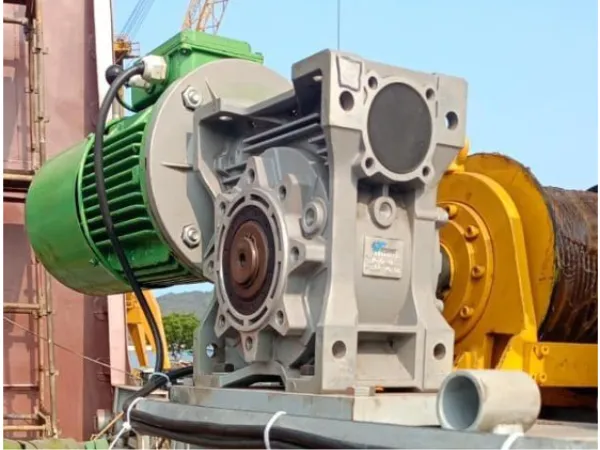
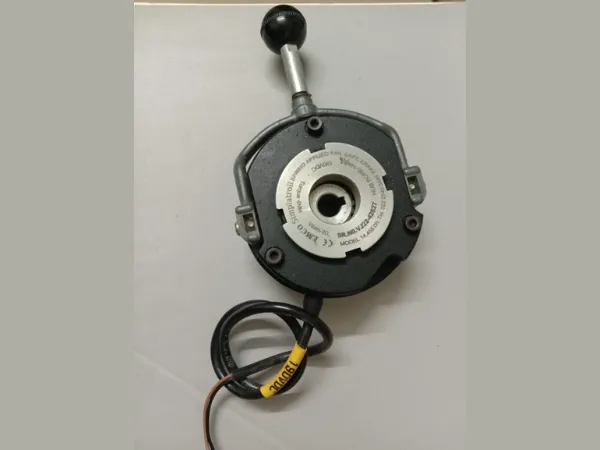
Spring Applied and Electromagnetically released disc brakes used in a Brake Motor are designed for braking rotating parts of the machine. The main task of this brake is apply brakes when power supply to the motor is lost due to power failure or in case of intentional braking. This brake is also known as ‘Normally On’, ‘Fail Safe’ , ‘Emergency brake’ etc.

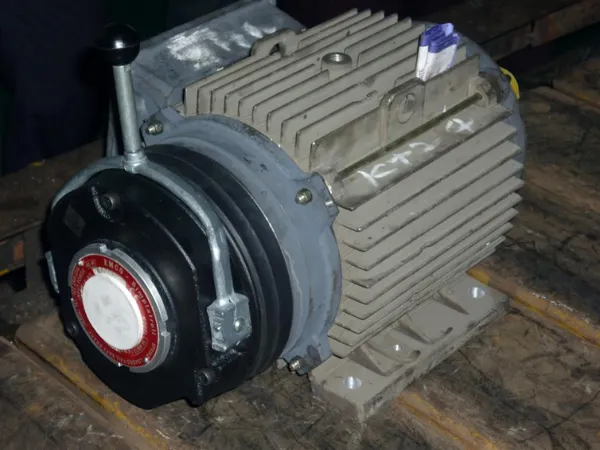
Brake Motors are used for various applications where instantaneous stopping of the driven load is required. It is a combination of A.C Induction motor and an electromagnetic D.C Brake. Spring Applied Electromagnetic DC brake can work only if DC supply is fed to it.

Motor which receives 415 V AC supply from the mains is supplied to the Brake via a rectifier which is housed in the terminal box. The rectifier receives supply from any two phases of the motor. This rectifier converts AC to DC voltage. The end application determines the value of DC voltage which can vary from 190 VDC, 103 , 96 ,205, 220 and 24 VDC. The standard DC voltages are 190 VDC, 96 VDC and 24 VDC. Emco Dynatorq make good rectifiers are available in the market. They are EH720 HHD | UM101| UM101A | UM101AV| UM101AVH | EH720 D EH720 CD | EH720 BD.

Operation

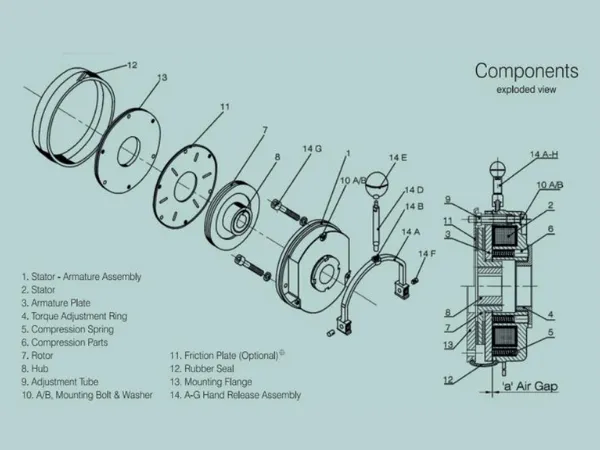
This has to be understood in conjuction with the view shown alongside.
When ‘Brake in not receiving any Power’ the compression springs (5) press the armature disc (3) and rotor (having liner on both sides) (7) against the brake mounting flange (13). As this brake mounting flange is bolted with motorend flange , rotation of the motor shaft is prevented. Hub (8) is firmly locked on the shaft and rotor slides over the hub .

On supplying power, stator (2) becomes a electromagnet due to the presence of copper coil inside it. This electromagnetic force will pull the armature disc over air-gap (a) towards the stator against the spring force . Thus Liner gets released allowing motor shaft to rotate. A air-gap is intentionally kept between the armature plate and the Stator.

If the brake has to be applied, power to the motor has to be cut-off resulting in the stator losing its electromagnetic pull which was acting on the armature disc so far. Now the spring force comes into play again and it presses the rotor again to its hold position with the mounting flange thereby stopping motor rotation instantly.

In the event of continuous power failure, rotor(7) can be freed by pulling the hand release (14). The hand release goes back automatically to its original position and brake will immediately revert to its safe action.

4

This has to be understood in conjuction with the view shown alongside.
When ‘Brake in not receiving any Power’ the compression springs (5) press the armature disc (3) and rotor (having liner on both sides) (7) against the brake mounting flange (13). As this brake mounting flange is bolted with motorend flange , rotation of the motor shaft is prevented. Hub (8) is firmly locked on the shaft and rotor slides over the hub .

On supplying power, stator (2) becomes a electromagnet due to the presence of copper coil inside it. This electromagnetic force will pull the armature disc over air-gap (a) towards the stator against the spring force . Thus Liner gets released allowing motor shaft to rotate. A air-gap is intentionally kept between the armature plate and the Stator.

If the brake has to be applied, power to the motor has to be cut-off resulting in the stator losing its electromagnetic pull which was acting on the armature disc so far. Now the spring force comes into play again and it presses the rotor again to its hold position with the mounting flange thereby stopping motor rotation instantly.

In the event of continuous power failure, rotor(7) can be freed by pulling the hand release (14). The hand release goes back automatically to its original position and brake will immediately revert to its safe action.
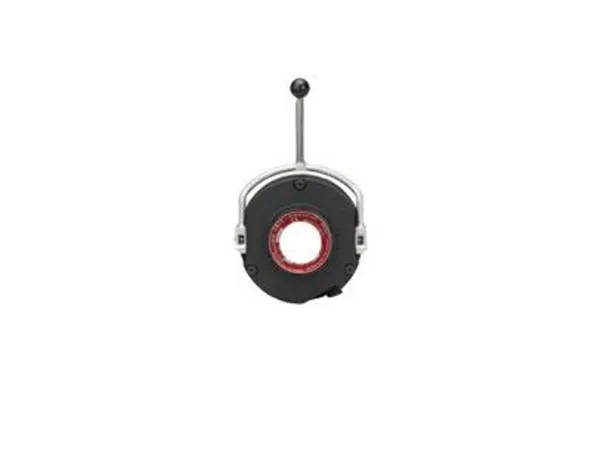
These brakes are called by different names but they mean the same thing.  Some calling names are
  • Spring Applied Electromagnetic DC Brake
  • Spring Applied Fail Safe Brake
  • Spring Applied DC Brake
  • DC Electromagnetic Brake DCEM
  • Electromagnetic DC Brake
  • Single Disc DC Brake
  • Electromagnetic Brake
5

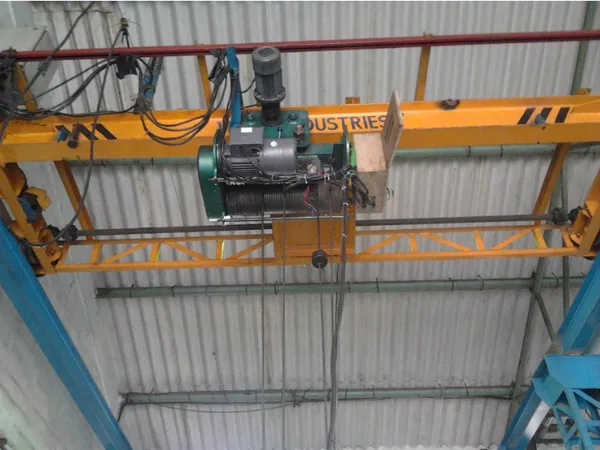
A motor driven rotating shaft can create numerous power transmission possibilities and safety considerations have necessitated the usage of Fail Safe Brakes. A motor driven hoist lifting a load against gravity needs a stopping mechanism else power failure can cause free fall of the load. There are many examples where instantaneous stopping is a functional requirement. More and more applications have EM braking in-built as a safety feature.

Irrespective of brake torque, overexcitation rectifiers are selected in all applications where lifting or lowering of the load is under constant influence of gravity.

Similarly DC switching must be carried out which will prevent slipping of the load. Such life enhancing measures are also to be adopted in brake motors that run on Variable Frequency Drive (VFD).

Today increasing safety audits are ensuring safe workplaces. The usage of DC applied Disc brakes is increasing. New uses are getting added to a big list of existing applications. Brake Motor or DC Disc Brake Applications are :

cranes&hoists

Cranes & Hoists

forklift

Fork Lift | Pallet Trucks | Reach Trucks

constructionlifts

Construction Lifts | Conveyors | Elevators | Escalators

inclinedmaterialhandlingequipment

Inclined Material handling equipment

machinetoolsattachments

Machine Tool Attachments

cnc&spm

CNC and SPM

automation&robotics

Automation and Robotics

tireproducingmachine

Tyre producing machine

infrastructureprojects

Infrastructure projects like Bullet Train | Tunnel project

textilemachines

Textile Machines

printingequipment

Printing Equipment

packagingequipment

Packaging Equipment

plasticprocessingmachinery

Plastic Processing Machinery

miningequipments

Mining Equipments

carparking

Car Parking

shipbuildingequipment

Ship Building Equipment

foundry&forgingequipment

Foundry and Forging Equipment

laundryequipment

Laundry equipment

indexingmachine

Indexing machine

powerplants

Steel , Sugar , Cement and Power plants

railroadequipment

Railroad Equipment

concretebatchingplant

Concrete Batching Plant

coilwindingmachines

Coil Winding machines

foodprocessingequipment

Food Processing equipment

constructionequipment

Construction equipment

aviationequipment

Aviation equipment

agriculturalequipment

Agricultural equipment

medicalequipment

Medical equipment

cuttingequipment

Cutting equipment

passengerlifts

Passenger Lifts

rcvdmachines

RCVD machines in Pharmaceutical plant

Emco Simplatrol 14.458 series Brakes are selected based on the required torque. The sizes range from 14.458.06 to 14.458. 46 and Torque values range from 05 NM to 1800 NM and above.
14.458 Weather proof , Flame proof and brakes with special accessories like
microswitch, space heater can also be provided

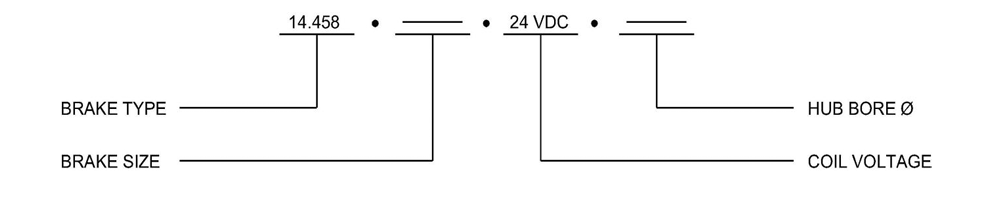
Necessary Ordering Details :

screenshot 2025 08 05 120351

Emco Dynatorq brake types for specific applications.

6
Type
Application
14.458
Brake Motor | Crane & Hoist | Machine Tools | Textile and other Machinery | Coil winding
14.450
Steel Plant and Dusty Work Zones
14.115
Packaging Machine and Special Machines
14.105
Machine Manufacturer
EH720HHD| UM101
Standard and Over Excitation Rectifiers
7

Air-Gap
Frequent start -stop of brakes will cause wear of the friction liner material. Over a period of time, this wear will increase the air gap between Stator and Armature plate. The air-gap thus has to be periodically adjusted to its factory set value.
With very little maintenance , it is possible use the brake for many years . It is advisable to keep a spare Rotor or Friction Liner disc along with Hub in stock as this is the only part that will need replacement.

Spares and Accessories:
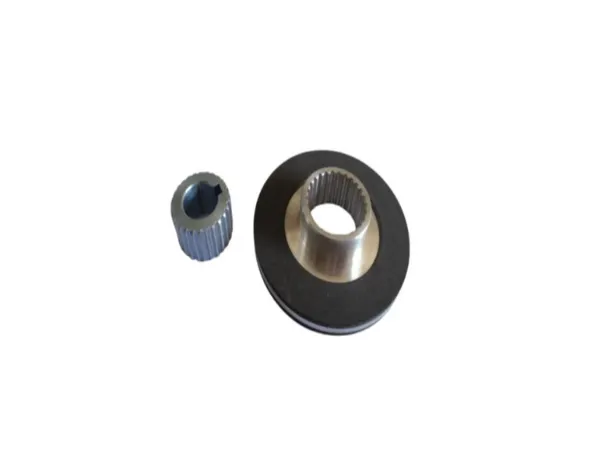
The other parts like Stator Coil Assembly, Armature Plate, Compression Springs, Adustment tube, Rubber Seal, Manual Hand Release Assembly, Torque Adjustment Ring etc can also be bought separately. Spares can be ordered as per requirement.

Selection of Brake Size:
The Brakes are rated by torque and selection of suitable model can be made by calculating the required torque using the formula: Braking Torque = 9550 x KW/RPM x Factor of Safety

Call Now Button